
As we approach the final weeks of the autumn term, I would like to celebrate the hard work of our pupils and share some exciting opportunities to explore science beyond the classroom this Christmas.
Assessment Week and Supporting Learning
Our secondary pupils have recently completed an important assessment week. Year 11 pupils have undertaken their mock GCSE examinations, Year 10 pupils have completed their Milestone assessments, and pupils in Years 7–9 have completed their Trust-wide BASE assessments.
These assessments help teachers identify strengths, address misconceptions and support pupils in making further progress. We encourage pupils to view their results as opportunities to learn and improve.
Parents and carers can support learning by encouraging children to explain what they have learned. Asking “Can you teach me something you learned today?” helps strengthen understanding. For older pupils, regular self-quizzing, flashcards and practice questions can help build confidence and prepare for examinations.
Science at Christmas: The Royal Institution Christmas Lectures
With Christmas approaching, I would like to highlight a fantastic opportunity for families to explore science together.
The Royal Institution Christmas Lectures have inspired young people since 1825, bringing scientific discoveries to life through exciting demonstrations, experiments and thought-provoking questions.
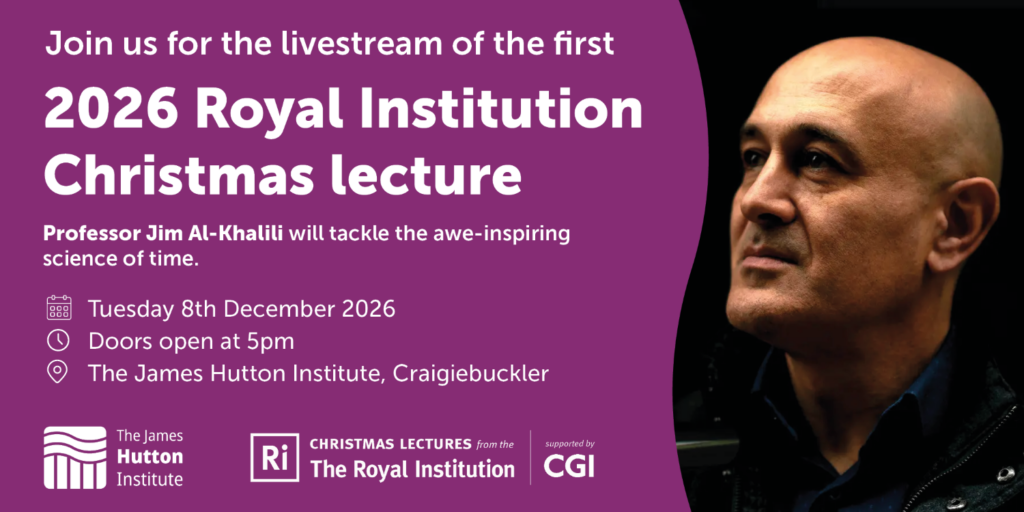
This year’s lectures, presented by physicist and broadcaster Professor Jim Al-Khalili, exploring the science of time. From understanding how we measure time to investigating whether time travel might be possible, the lectures will challenge our understanding of the universe.
The lectures will be broadcast on the BBC and available on BBC iPlayer in late December. Birmingham’s Thinktank Science Museum will also host screenings on 8, 10 and 12 December, offering families an opportunity to experience the lectures together.
Further information: www.rigb.org/christmas-lectures
Bringing Science to Life at Home and Around Birmingham
Science is not confined to laboratories or textbooks. Some of the most exciting discoveries begin with simple questions about everyday experiences.
Over Christmas, younger children might investigate which objects float or sink, explore how shadows form or observe changes in nature. Older children could design a paper helicopter and investigate how changing its blades affects its flight, explore the science behind cooking or investigate how different materials act as insulators.
The important part is encouraging children to ask questions, make predictions, test ideas and explain their discoveries. These skills develop throughout a child’s education, from primary school to GCSE and beyond.
There are also fantastic opportunities to explore science locally:
- Thinktank, Birmingham Science Museum: Interactive exhibits exploring engineering, space and the natural world, alongside a planetarium and Science Garden. Admission charges apply. www.birminghammuseums.org.uk/thinktank
- Lapworth Museum of Geology, University of Birmingham: A free museum where families can discover fossils, dinosaurs and the fascinating history of our planet. www.birmingham.ac.uk (search Lapworth Museum).
For free science experiments and demonstrations at home, families can also explore the Royal Institution’s ExpeRimental resources at www.rigb.org.
Inspiring Future Engineers and Scientists
Our Year 9 pupils are currently studying engineering, exploring how scientific principles can solve practical problems. Engineering offers exciting careers, from developing medical technologies and renewable energy to designing transport systems and even theme park attractions.
The Royal Academy of Engineering’s This is Engineering campaign highlights these opportunities through real-life examples and videos. Families can explore these at www.thisisengineering.org.uk.
As we approach Christmas, I encourage all our pupils to remain curious, ask questions and explore the world around them. Thank you for your continued support, and I wish you and your families a wonderful festive period.
Kind regards,
Mr A Yeomans
Associate Assistant Principal – Science